Fog as Portal: Mystical Weather of the Parallel Capital
The city of San Francisco is not only famous for its iconic Golden Gate Bridge and undulating streets, but also for its characteristic fog that rolls in like a living tapestry, sometimes obscuring and revealing the city’s landscapes in a dance of mysticism. While meteorologists can explain the science behind this natural phenomenon, folklore and urban legends suggest that San Francisco’s fog acts as a portal to otherworldly dimensions, earning the city the whimsical title of the “Parallel Capital.”
The Meteorological Marvel
Understanding the meteorological marvel of San Francisco’s fog is essential to appreciating its mystical allure. According to the National Oceanic and Atmospheric Administration (NOAA), this fog, particularly known as “advection fog,” is created when moist, warm air from the Pacific Ocean meets the cool California current. As the air is cooled to its dew point, it forms fog. This natural occurrence is witnessed most famously at the Golden Gate due to the unique geographical and climatic conditions of the region.
“The heavy, rolling fog is nature’s way of graffiti, painting the city in shifting shades of grey,” explains Dr. Emily Wang, a climatologist at the University of California, Berkeley.
The Winds of Folklore
Stories of fog as a mystical portal have persisted, feeding the imaginations of locals and tourists alike. The legends suggest a hidden world where parallel universes may intersect with our own, with the fog serving as the veil that divides these realities. Such tales do not merely entertain but also embody the cultural richness of the area remaining intertwined with the city’s history.
Fog City Mystique: One of the more popular tales is that of the Phantom Ferryman, a spectral figure who appears in the mist, offering a ride across the shimmering waters not to another shore but to another plane of existence. Those who claim to have glimpsed this wraith often describe the experience as transcendent yet terrifying, an inexplicable blur of time and place.
A Literary Lens
The mythos of the fog has inspired many artists and writers who seek to unravel or reimagine its mysteries. From the hauntingly beautiful passages in the works of Jack London to contemporary takes by local novelists, the fog is both a muse and a character in its own right. London, who vividly described the Bay Area’s atmosphere in his time, wrote of the fog as an entity—alive and imbued with character, echoing the sentiments of the old seafarers who believed the ocean’s mist had a soul.
“The fog was like a living being, whispering secrets of realms beyond our ken,” wrote London, capturing the essence of the fog’s allure.
Art and the Veil of Fog
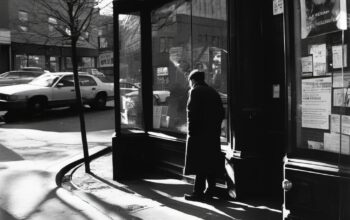
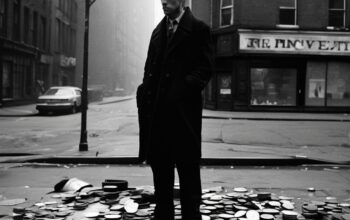
San Francisco’s fog inspires not just wordsmiths but visual artists as well. Photographers, enamored by the ethereal beauty of the city’s shrouded figures, capture moments that seem frozen between reality and dreams. The fog-blurred landscapes become canvases that evoke emotions of longing and mystery, inviting viewers to step closer and perhaps, in doing so, step sideways into unseen worlds.
- Photographic Visions: Celebrated photographers like Ansel Adams have famously captured the haunting beauty of the fog, invoking the idea of hidden stories within its depths.
- Painted Dreams: Local painters often depict the fog not as an obscuring force but as an ethereal foreground through which the vibrancy of the city’s life shines.
Scientific and Metaphysical Dimensions
While the scientific basis for fog is well-understood, the mystical interpretations invoke questions about human consciousness and the possibility of alternate realities. What if the fog does more than hide the cityscape? Psychology Today explores how environmental conditions like fog can affect the perception of time and space, offering fertile ground for experiencing altered states of consciousness.
Psychologists suggest that environments imbued with mystery, such as mist-shrouded areas, can provoke liminal experiences—those fleeting moments when the ordinary world melts away, and a realm of possibilities opens. It is perhaps this intersection of natural phenomena and cultural imagination that gives rise to the belief in fog as a portal.
Contemporary Echoes
Today, the stories and cultural elements of the San Francisco fog continue to influence the city’s identity. The fog has its own “social media” presence, with accounts humorously attributing personality to the atmospheric condition. Karl The Fog, the fog’s unofficial Twitter presence, has thousands of followers and adds a playful digital layer to the otherwise ancient mythos.
Furthermore, the notion of fog as a portal has seeped into popular culture beyond local legends, inspiring films, shows, and video games that explore themes of alternate realities and the mysteries lurking within the mist.
Concluding Thoughts
The fog of San Francisco remains a complex character—one entrenched in both scientific explanation and mystical possibility. As residents and visitors gaze out into the gray mists covering the bay, they become part of a legacy that straddles both time and dimension. Whether regarded as a meteorological phenomenon or a gateway to the unknown, the fog is an indelible part of San Francisco, the “Parallel Capital,” where nature and imagination constantly redefine the boundaries of reality.